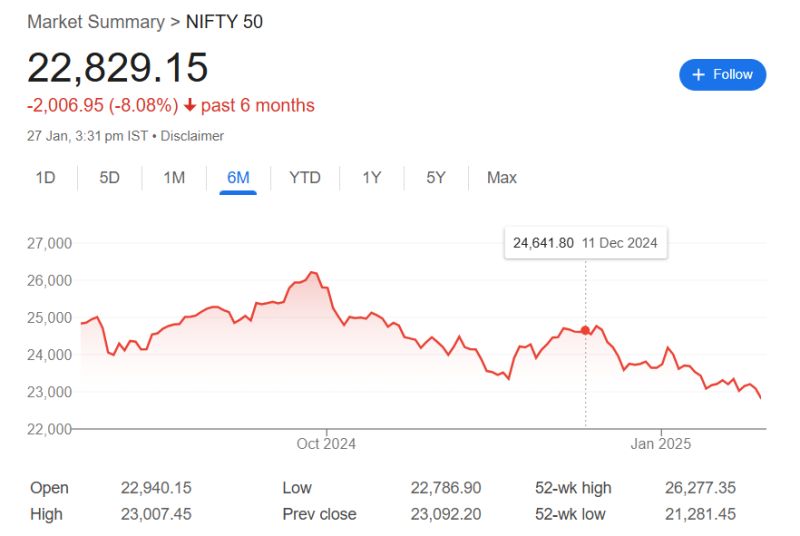
The market fell, and suddenly index funds are bad?
With the recent market downturn, a chorus has risen against #Index #MutualFunds. Wealth managers loudly advocate for a switch to active funds, citing the apparent underperformance of index funds compared to their active counterparts.
Why the Push for #ActiveFunds?
- Higher Margins for Distributor - Active funds come with higher expense ratios (TER), which translate into better commissions for mutual fund distributors. Naturally, this makes them more inclined to promote active funds over passive funds.
- Selective Success Stories - Wealth managers conveniently highlight top-performing active schemes in hindsight while glossing over the many funds that have lagged behind the benchmark. Unfortunately, most investors rarely revisit the track record of past recommendations and get swayed by the latest sales pitch.
What Should Investors Do?
For long-term goals, the recent market correction isn’t a reason to panic but an opportunity to recalibrate the portfolio according to your planned #AssetAllocation.
For short-term goals, your equity allocation should’ve been diluted long ago and parked in debt instruments.
Active funds may outperform in some cases, but consistently picking winning funds is easier said than done. Index funds, on the other hand, offer simplicity, transparency, and low costs—qualities that make them a strong contender for long-term investing.
As investors, the focus should be on discipline, asset allocation, and a clear understanding of goals, not chasing short-term trends propagated by #Finfluencers!
But then we all get blinded by returns, and happily forget the risks!