
Why delivery partners need to worry about TDS and ITR
Most #Delivery partners earn below the #taxable limit...
...yet they still need to worry about #TDS and filing an #ITR.
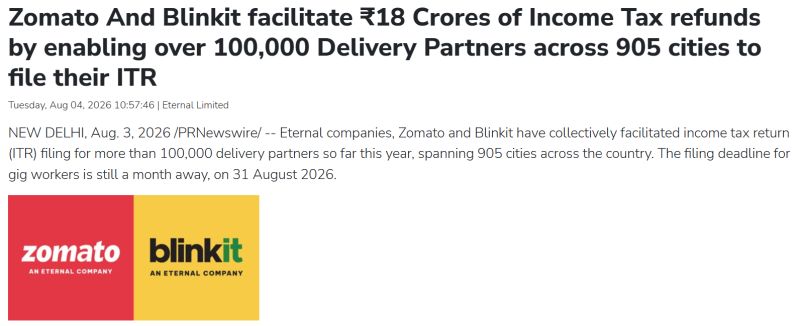
That surprised me. So I dug deeper.
The logic behind it isn't entirely flawed.
The government says:
• TDS creates a digital income trail.
• Filing ITRs helps gig workers build a financial history.
• That, in turn, can improve access to #loans in the future.
Sounds reasonable.
But think about a typical delivery partner.
• Many work on multiple platforms.
• Some work only during weekends or vacations.
• Many may not even know TDS has been deducted.
• A large percentage may never file an ITR to claim their refund.
Which means...
Their own money stays with the government until they claim it.
Or worse...
They never claim it at all.
Another aspect nobody is talking about is #compliance.
Even educated folks struggle to file their tax returns.
Now imagine a gig worker who has been juggling across platforms like Zomato, Swiggy, Blinkit, Zepto and others, to earn more, over the course of a year.
Yes, platforms like Zomato are trying to simplify tax filing.
But does the solution work seamlessly when income comes from multiple platforms?
Does the filing fee increase?
How many workers will actually complete the process?
Then comes another important question.
#Privacy.
If tax filing is routed through third-party platforms, they now have access to the income data of lakhs of gig workers.
Will that data only be used for filing taxes?
Or will it become another channel to cross-sell loans, insurance and financial products?
Most people click "Agree & Continue."
Very few read what they're agreeing to.
Could there have been a better approach?
If for a Delivery partner, #PAN is already linked and income is paid in a bank account, the Digital trail is established!
So, what is the need for TDS to be deducted?
If TDS is deducted, many people need to file an ITR simply to claim back money that was never taxable.
#MoneyMinusNoise:
Good policy isn't just about collecting taxes correctly. It's also about reducing compliance for the people who are least equipped to deal with it. Technology should support that!
What do you think?
Should delivery partners below the taxable limit be exempt from TDS, or do the long-term benefits of creating a financial trail justify the extra compliance?
PS - I haven't gone through the Zomato flow of filing the ITR, so these are generic assumptions taken based on generic experience from various platforms.
Article link - https://lnkd.in/dPbZ-Eye